

Ubuntu as a Vaccine Against Ebola


By Firdaus Kharas, OC
In the Ebola outbreak in the Democratic Republic of the Congo (DRC), the medical emergency is obvious. The informational emergency is being underestimated. Yet it is information that prevents many people from becoming patients in the first place.
The videos containing vital information are done. The first one, an animated video called Ebola: A Poem for the Living, is designed to contain an outbreak. The second one, called Ebola: In Praise of Prevention, an animated video for prevention has five-times Grammy Award-winning Angélique Kidjo’s powerful singing. They exist in multiple languages, including languages for the DRC and Uganda. These free, multi-award-winning videos have saved lives. To save lives again they must be used and seen in the DRC and Uganda.
Medical interventions are appropriate and necessary when a person has the Ebola virus and is sick. But information can prevent people from becoming sick in the first place. For too long, far too little attention has been paid to preventing people from getting sick, especially from preventable diseases like Ebola. The irony is that Ebola is not like a disease whose means of prevention are unknown.
Hundreds of millions of dollars are mobilized for treatment centres, doctors, nurses, protective equipment, quarantine facilities, and emergency logistics. All of this is necessary. But if people are not informed before they are infected, the response is already arriving late. The mortality rate for the strain involved in the current outbreak, the Bundibugyo strain, is estimated at 30 to 50 percent.
When an outbreak involves a strain for which there is no licensed vaccine or specific treatment, which is the case in the current outbreak in the DRC, prevention depends not on laboratories, clinics, medicines, and medical doctors. It depends on whether people receive accurate information quickly, in a language and form they understand and act upon.
We must urgently adopt and act on a critical fact: when a virus spreads through fear, silence, rumour, unsafe practices, and mistrust, public education is a frontline intervention. Already at least two Ebola treatment centres in the DRC have been burned to the ground, patients with Ebola have been forcibly released from isolation, and people are demanding bodies with Ebola be returned to families for burial. All those acts are based on a lack of information and understanding.
I have spent decades creating human-centred media designed to change behaviour, save lives, and reach people across cultures. My animated public education work over the last thirty years has addressed twenty diseases, including Ebola. My multilingual Ebola-containment and Ebola-prevention videos, created during the West African Ebola crisis more than a decade ago, were designed precisely for moments like this: a fast-moving outbreak in which accurate public education can mean the difference between containment and catastrophe.
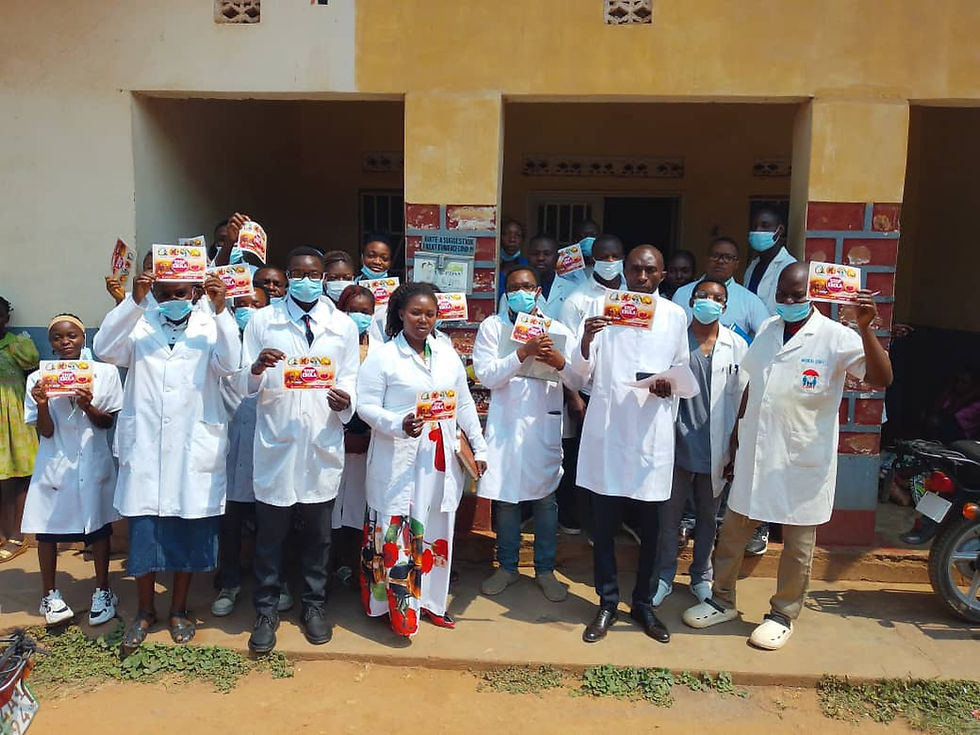
Each video’s strength is that it is animated, simple, multilingual, emotionally accessible, free to use, and evergreen. It does not depend on the identity of a particular doctor, politician, broadcaster, or institution. It can travel by television, radio-linked campaigns, social media, WhatsApp, and screenings to individuals, groups, clinics, churches and schools.
A powerful community-centred approach is expressed by Rev. Dr. Betty Kazadi Musau, Director of Communications for the North Katanga United Methodist Church in the DRC. Drawing on the African concept of ubuntu, she argues that prevention and support must involve not only medical authorities, but also families, local leaders, churches and communities. Prevention, in this view, is not a medical act. It is a value-based responsibility.
Ubuntu teaches that a person’s well-being is tied to the well-being of others. Amid an Ebola outbreak, that idea becomes urgent. One informed person can protect a family. One informed family can protect its neighbours. One informed community can help protect another.
As Rev. Dr. Kazadi Musau puts it, “Ubuntu via education will be a vaccine.” Knowledge becomes communal protection. Education becomes an act of care. Prevention becomes a shared responsibility.
In Ebola containment and prevention, that matters enormously. People need to know how Ebola spreads. They need to understand why early reporting of symptoms matters. They need to know why careful care and safe burial practices are essential. They need to know that stigma can drive the disease underground. They need to know that rumours can kill. They need to know how to avoid becoming sick in the first place, rather than face a mortality risk that gives them an even chance of surviving or dying.
Musau identifies one of the central dangers in any outbreak: misinformation. Communities in the DRC are living, she notes, “in the midst of rumors and misinformation,” and what we might now call “fake news.” The answer, she says, is clear: provide accurate information. Everyone, without exception, should learn how to contain and prevent this deadly virus.
This is not a secondary issue. Misinformation can cause people to hide illness, reject health workers, touch their loved ones with the virus, resist safe burial procedures, or even believe that Ebola is some imported method of decimating African populations. In that context, trusted public education is not optional. It is a critical part of the emergency response.
Ebola-containment and Ebola-prevention videos offer practical tools for exactly this purpose. Because each is animated, it avoids many barriers that can weaken conventional public-health messaging. It does not shame communities. It does not lecture them. It can be dubbed, subtitled, adapted, and circulated widely. It can reach children, adults, elders, health workers, religious leaders, and people with limited literacy. It can be repeated often, which is essential for behaviour change.
The response should begin immediately: distribute the videos through churches, clinics, schools, radio stations, community health workers, WhatsApp groups, local broadcasters, and mobile phones. Translate, dub, broadcast, share, and repeat them.
Messages must reach people before the virus does. Education becomes life-affirming solidarity. That is ubuntu in action.
Urgent Funding Request: Together, we can prevent Ebola by working with religious networks who are trusted by their local communities. Harper Hill Global's faith-based network spans multiple countries, and our teams are ready to respond. Your gift of $500 or even $1,000 will aid in our responsiveness. Please give now.
Kharas is the founder of Chocolate Moose Media, whose animated public-service campaigns have been used around the world to address public health, human rights, refugees, violence prevention, and social change. He is an Officer of the Order of Canada (OC) and a recipient of the Peabody Award.
Contact: Neelley Hicks, Executive Director, Harper Hill Global: nhicks@harperhill.global

Comments