

Helping Pregnant Women Stay Healthy In Busy Season
By the Rev. Dr. Betty Kazadi Musau
KAMINA, Congo
For women who work on farms in the Congo, staying healthy can be a challenge, especially if they are pregnant during farming season.
Nurses and community health workers focus on helping pregnant women stay healthy during this busy time. That includes focusing on education to level up the well-being of women.
At United Methodist-related Shungu Clinic and Lupandilo, Lwembe, and Kasanya health centers, nurses are busy welcoming pregnant women, raising awareness about malaria, and doing weekly checkups for hypertension. Nurses and health workers also assist women with mosquito nets, provide medicine such as aspirin and share information on how to deal with symptoms of high or low blood pressure. The mosquito nets are provided by the government, a reflection of public and private health ministries working together.
With the weather being so hot, it is high time for raising awareness among pregnant women, according to Dr. Patrick Ilunga Kilunji, director of Shungu Clinic. A lot of women who come to the clinic for its hypertension program do subsistence farming, growing vegetables to sell in the market, he said.
They should be alert to symptoms such as headaches and dizziness, while also being sure to drink a lot of water, reduce salt intake and attend their prenatal care appointments, the doctor said.
Kayembe Banza Therese, a mother of two children, moved from Kamina to Kaloba for farming. She shares that for her children, she followed the prenatal care process and hypertension testing. She usually attends her appointments, and she said she is grateful for the mosquito net and aspirin. With the mosquito net, she can protect her family.
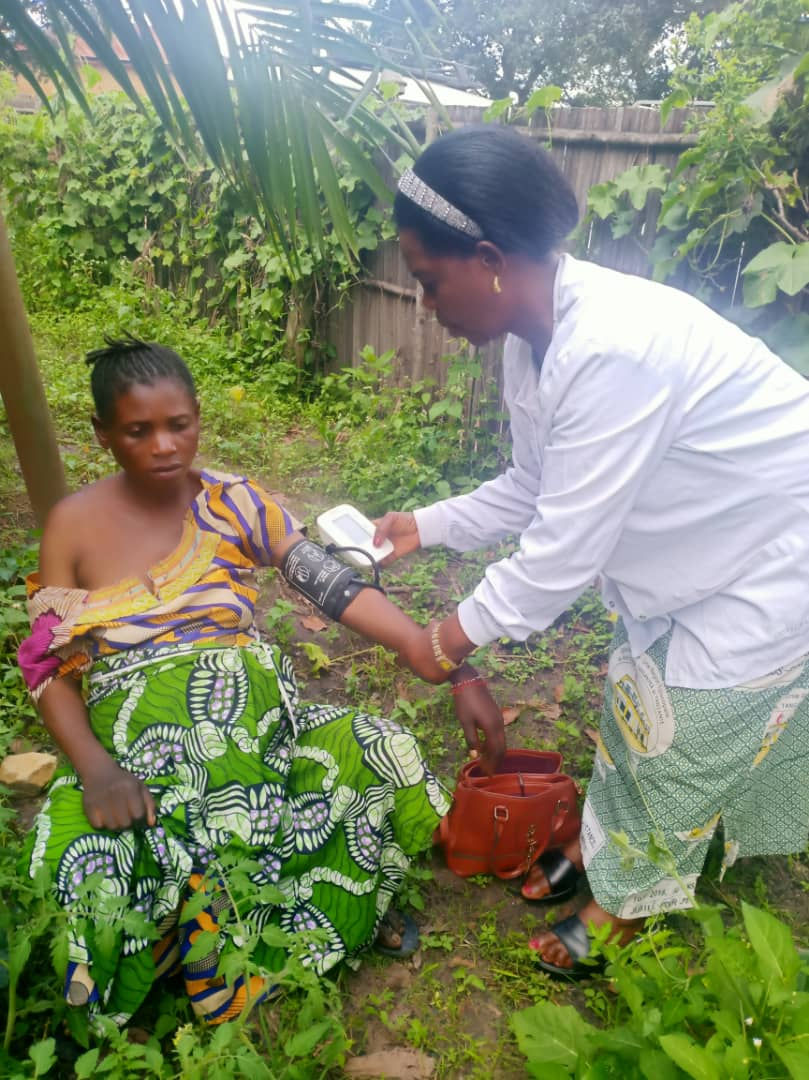
Many women who come to Lupandilo health center are small-scale farmers, such as Lumbala Ilunga Consolate, a mother of three children and the wife of a builder. Though she lives on the farm, she attends all of her appointments for prenatal care, she said. “As I have received mosquito nets like others, I am committed to come for the health of my baby and mine.”
During weekly prenatal care, women are educated to eat a lot of vegetables to get iron in the body. At Lupandilo, nurse Malu Mpaka Angel said pregnant mothers are advised not to do hard work on the farm, especially heavy lifting.
At the Lwembe and Kasanya health centers, nurses in chief said that workers go to the farms on Monday and Tuesday, and that women respect the day of appointment for prenatal care. At home or in the village, women are reminded by friends and community health workers to attend their appointments and follow healthy practices.
Sanitary education is a lifelong need for women, Angel said. Education can spare women unnecessary medical challenges, ensuring a healthy delivery and protecting against malaria, while also promoting the overall health of the household.

When women come for hypertension testing, they also receive bed nets, Angel said. Mothers can use the nets to protect themselves and members of their households during the hot season, when mosquitoes carrying malaria are active. “Malaria kills,” she said.
To help educate women about hypertension, Harper Hill Global has provided a mobile classroom that goes into the rural areas, and it has produced a communications package, which includes animation, a song and SMS text messages, said the Rev. Neelley Hicks, who directs the non-profit agency.
“We also provided blood pressure monitors and low-dose aspirin to Shungu and other clinics in its region,” she added. Harper Hill Global began the hypertension program in 2021.
Due to the hot weather, nurses double the health checkups for pregnant women. Community health workers visit patients every week and make referrals to a nearby health center.
For Lupandilo health center, pregnant women are given a badge as a token to be shown at the next prenatal care appointment. When a woman does not show up, the staff will know by the missing badge.
At Shungu, Kilunji has a list of phone numbers of community health workers who visit patients’ homes and share education. This health education concerns not only women but also spouses, he said, because all householders are involved in caring for their families.
Caring is timeless, and especially doing it for pregnant women. It is a continuous supply of social holiness – visioning healthy, conscious, and informed generations.
Kazadi Musau is director of communication for The United Methodist Church’s North Katanga Episcopal Area.
How to help: For less than $1 a day, your gift will provide a woman with food, medicine, and trauma recovery. Join the Health and Hope Circle today by becoming a monthly donor! 🌍💛 Hope heals. A monthly donation makes you a part of a community of monthly givers who are creating lasting change through Harper Hill Global. Join Now!
Comments